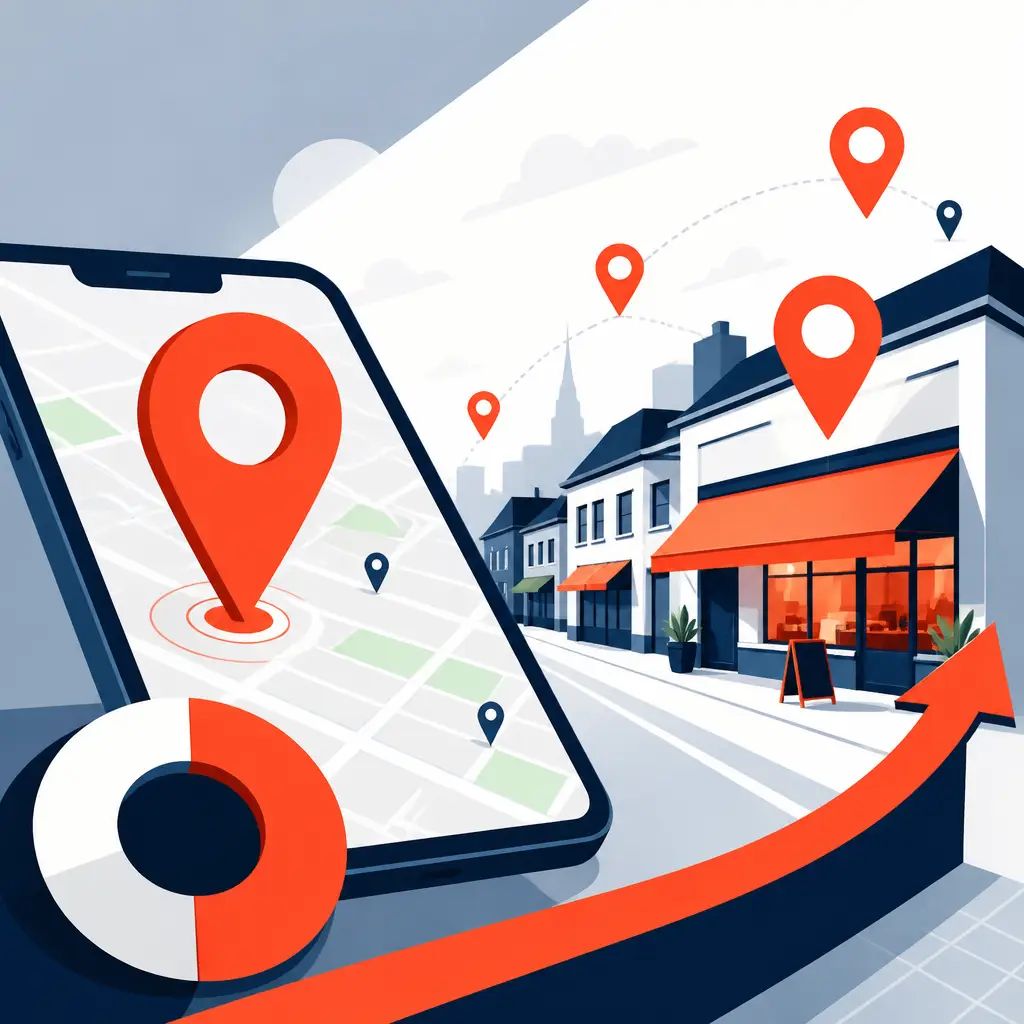
46% of all Google searches have local intent. That's not a small slice of traffic, it's nearly half of everything people type into Google. And with mobile searches for "near me" businesses growing by over 500% in recent years, local SEO strategies have moved from nice-to-have to genuinely essential for any business that serves a specific area.
If you run a shop, a service business, or any operation with a physical presence (or a defined service area), this is where your SEO efforts should be focused.
Key Takeaways
- 46% of Google searches have local intent, making local SEO one of the highest-return activities for location-based businesses.
- A fully optimised Google Business Profile makes you 2.7 times more likely to be considered reputable.
- Consistent NAP (Name, Address, Phone) information across every listing is foundational, get it wrong and it actively hurts your rankings.
- Over 64% of global internet traffic comes from mobile devices, so mobile performance and voice search optimisation aren't optional extras.
- 75% of users regularly read reviews before engaging with a local business, so managing your reputation online is part of the SEO job.
1. Claim and Optimise Your Google Business Profile
Your Google Business Profile (formerly Google My Business) is the single most important piece of local SEO real estate you have. Businesses with a complete, optimised profile are 2.7 times more likely to be considered reputable.
To get the most from it:
- Claim your listing and verify ownership
- Make sure your name, address, and phone number are exactly right
- Add high-quality photos and videos
- Choose the correct categories and attributes for your business
- Ask customers to leave reviews, and actually respond to them
- Keep posting updates, offers, and events regularly
That last point matters more than people realise. An active, regularly updated profile signals to Google that your business is current and engaged.
2. Do Localised Keyword Research
Generic keyword research won't cut it here. You need to understand how people in your area search for what you offer.
Start with tools like Google Keyword Planner, SEMrush, or Ahrefs, and look for high-intent phrases tied to your location. A solicitor in Manchester might target "personal injury solicitor Manchester" or "local employment lawyer near me". A plumber might go after "emergency plumber [town name]".
Once you've got your list, weave those keywords into your page titles, meta descriptions, headings, and body content. Don't forget to update your Google Business Profile to match.
3. Build Localised Landing Pages
If you serve multiple areas, one generic homepage won't rank for all of them. You need dedicated pages for each location or service area.
Businesses that create these pages see conversion rates of up to 4.3% on average. Each page should:
- Include local keywords in the URL, title, and meta description
- Feature testimonials or case studies from customers in that area
- Mention local community involvement where relevant
- Have a clear, specific call to action
Think of each page as a mini website for that location. The more genuinely useful and specific it is, the better it performs.
4. Keep Your NAP Consistent Everywhere
NAP stands for Name, Address, and Phone number. It sounds simple, but inconsistent NAP information across your website, Google Business Profile, directories, and social media profiles genuinely confuses search engines and can hurt your rankings.
Check for:
- Spelling variations ("St" vs "Street", "Ltd" vs "Limited")
- Old addresses or phone numbers that haven't been updated
- Different formats across different platforms
Google uses NAP data to verify that your business is legitimate. Small inconsistencies add up.
5. Build Local Citations
Citations are online mentions of your business's NAP on directories, review sites, and local resources. Think Yelp, the Better Business Bureau, FourSquare, and local Chamber of Commerce websites.
The more high-quality, accurate citations you have, the stronger your local SEO signal. Audit your citations periodically to remove duplicates and correct any errors. It's the kind of unglamorous work that makes a real difference over time.
6. Earn Local Backlinks
Backlinks from local websites tell search engines that your business is relevant and trusted within your area. Businesses with strong local backlink profiles consistently outrank their competitors.
Some practical ways to build them:
- Guest post on local blogs or news sites
- Partner with local organisations or influencers
- Sponsor community events or charities
- Send press releases to local media outlets
Internal linking matters here too. Connect your service pages, blog posts, and location pages to each other so both users and search engine crawlers can navigate your site logically.
7. Add Structured Data Markup
Structured data (also called schema markup) is code you add to your site that helps search engines understand what your business is, where it is, and what it does. Google prefers the JSON-LD format for local business markup.
Getting this right can get your business showing up in rich results, with your opening hours, reviews, and location displayed directly in search. Google's Structured Data Markup Helper is a good place to start if you want to implement it yourself, though this is something a developer can set up quickly.
8. Optimise for Mobile and Voice Search
Over 64% of global internet traffic comes from mobile devices. On top of that, 20% of all Google searches are voice-based. Both of those numbers have direct implications for local SEO.
For mobile:
- Use a responsive design that works on all screen sizes
- Make sure pages load quickly
- Add click-to-call buttons so people can reach you in one tap
- Keep forms short and easy to complete on a phone
For voice search, people speak differently to how they type. Optimise for conversational, long-tail phrases like "best plumber near me open now" rather than just "plumber Manchester".
Google PageSpeed Insights is a free tool you can use to test and improve your mobile performance.
9. Actively Manage Your Online Reviews
75% of users regularly read reviews before engaging with a local business. Reviews aren't just a trust signal for potential customers, they're a ranking factor for local search too.
What to do:
- Ask happy customers to leave reviews on Google, Yelp, and Facebook
- Respond to every review, good or bad, promptly and professionally
- Display strong testimonials on your website and landing pages
If you're going to offer incentives for reviews, check the platform's guidelines first. Google, for instance, doesn't allow incentivised reviews.
10. Use Social Media to Reinforce Local Relevance
Active social media engagement builds brand awareness and drives local traffic. It's not a direct ranking factor in the way links and on-page signals are, but it supports everything else you're doing.
Post local content: community events, local news, behind-the-scenes from your area, special offers for local customers. Use social listening tools to keep track of what people are saying about your business and respond. The engagement you build on social carries back to your site and your Google Business Profile.
Track likes, shares, comments, and brand mentions to get a clear picture of what's working.
Putting It All Together
Local SEO strategies aren't a one-time fix. They're an ongoing set of activities that compound over time. The businesses that do well locally are the ones that keep their information accurate, stay active on their profiles, earn genuine reviews, and build real connections in their area.
If you're not sure where your SEO currently stands, or you want someone to do this properly rather than piecemeal, our SEO and paid advertising services are built around getting you visible to the people who are already searching for what you do.
And if your website itself needs work before any of this will pay off, take a look at our website maintenance service to make sure the foundations are solid first.
Frequently asked questions
What is local SEO and how is it different from regular SEO?
Local SEO focuses on appearing in search results for users in a specific geographic area, whereas traditional SEO targets a national or global audience. It involves tactics like optimising your Google Business Profile, building local citations, and targeting location-specific keywords.
How important are online reviews for local SEO?
Very important. 75% of users regularly read reviews before engaging with a local business, and reviews are also a ranking signal for local search results. Responding to reviews and actively encouraging happy customers to leave them both make a measurable difference.
What does NAP mean and why does it matter?
NAP stands for Name, Address, and Phone number. Google uses your NAP data to verify your business is legitimate. Inconsistencies across your website, directories, and social profiles can confuse search engines and hurt your local rankings.
How much of Google search traffic has local intent?
46% of all Google searches have local intent, meaning nearly half of all searches are from people looking for something in a specific area. That makes local SEO one of the most valuable focuses for any location-based business.
Related articles


Related services
Need a hand with this? Here's how IceBoxDesigns can help.