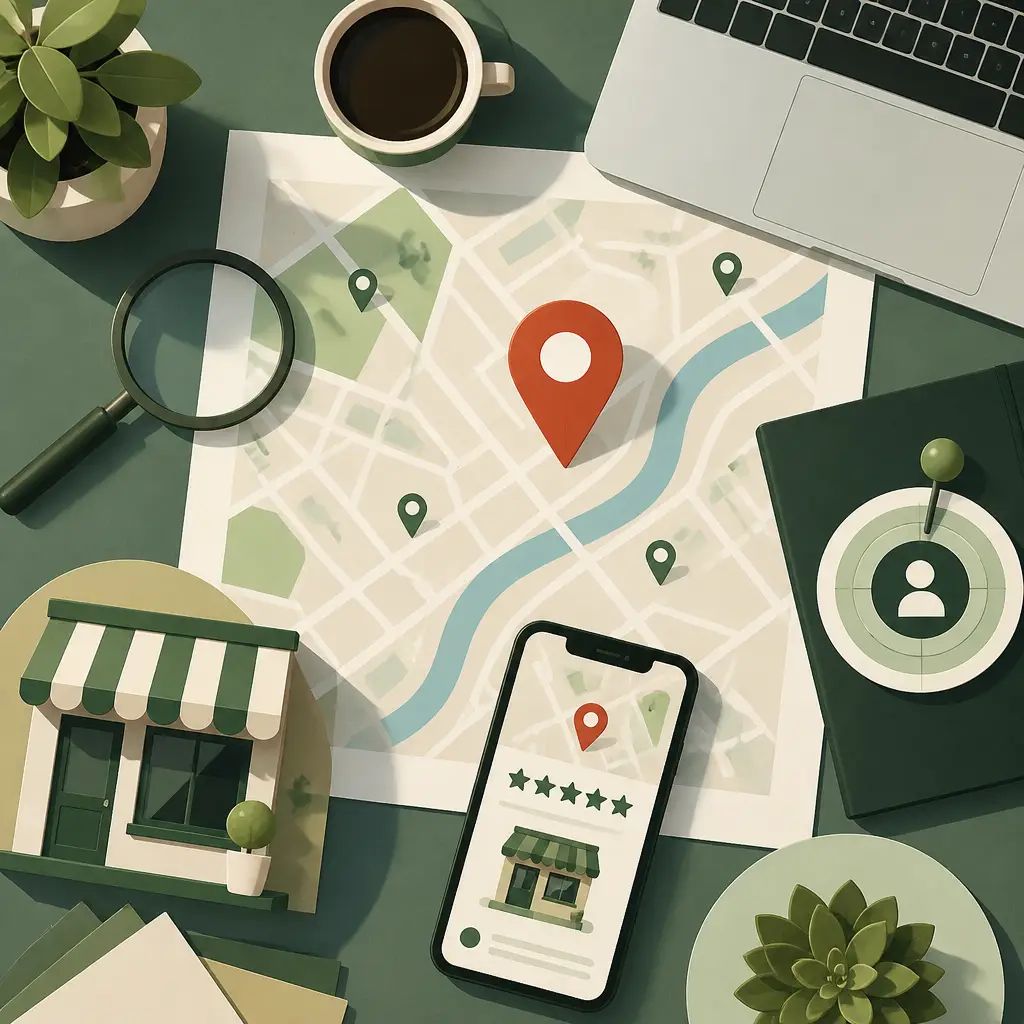
If your business doesn't show up when someone nearby searches for what you offer, you're handing that customer straight to a competitor. Local SEO for small businesses is what puts you in front of people at the exact moment they're ready to spend, no paid ads required.
Key Takeaways
- Local SEO gets your business in front of nearby customers who are actively looking to buy, book, or visit.
- 92% of consumers search for local businesses online at least once a month.
- Google ranks local results on three factors: relevance, distance, and prominence.
- Your Google Business Profile is often the first thing a potential customer sees, before your website.
- 70% of people say reviews frequently influence their purchasing decisions.
What Local SEO Actually Is
Local SEO is the process of optimising your online presence so your business appears in search results when people look for services nearby. Think searches like "coffee shop open now" or "plumber in Newark", location-based queries that happen millions of times every day on Google.
The prize here is Google's local "map pack": the block of three businesses that appears at the top of local search results, complete with a map. If you're in that pack, you're visible at the moment someone is ready to make a decision. If you're not, you might as well not exist to that searcher.
Local SEO vs General SEO: What's the Difference?
General SEO is about ranking for broad, often national or global keywords. It suits online shops or publishers chasing wide audiences. Local SEO is narrower by design, it's about winning customers in your neighbourhood or city who are looking for something close by.
| General SEO | Local SEO | |
|---|---|---|
| Target audience | National or global | Nearby customers |
| Main signals | Content, backlinks | Google Business Profile, citations, reviews |
| Cost | Higher | Lower |
| Speed to results | Slower | Faster |
| Best for | Online stores, blogs | Bricks-and-mortar, local services |
Local SEO typically costs less than general SEO because it targets a smaller geographic area and leans on Google Business Profile optimisation, local citations, and reviews rather than large-scale content and link-building campaigns. For a small business, that means lower monthly costs, faster results, and a quicker return on investment.
Why It Matters: Your Customers Are Already Searching
Local search isn't a niche habit. At least once a month, 92% of consumers search for local businesses online, checking hours, reading reviews, browsing menus, comparing services. That behaviour is baked into everyday life.
When your business appears in those local results, it earns instant credibility. People trust what shows up first. They call, click, and walk in because they assume the businesses Google surfaces are legitimate. That trust translates into real-world footfall and sales, without paying for every click.
If you're not showing up when customers search, you're not just missing out, you're actively sending business to whoever is showing up instead.
The 6 Pillars of a Strong Local SEO Strategy
1. Google Maps Visibility
Over a billion people use Google Maps every month. It's where people find directions, check opening hours, browse photos, and read reviews, all in one place. From a search perspective, Maps visibility is central to your strategy. Strong local optimisation earns you placement where users are already looking, rather than hoping they scroll past ads and organic listings to find you.
Google decides local rankings based on three core factors:
- Relevance, how well your business matches what someone is searching for, based on your categories, services, and profile content.
- Distance, how close your business is to the searcher or the location mentioned in the query.
- Prominence, how well known and trusted your business appears online, based on reviews, links, citations, and overall visibility.
Prominence is where most small businesses either build momentum or fall behind. When these three signals align, rankings follow. When they don't, even a beautifully designed website won't save you.
2. Your Google Business Profile
Most customers see your Google Business Profile (GBP) before they ever click through to your website. It appears in search results and on Maps, and it often gives a potential customer everything they need to decide whether to contact you, service lists, reviews, location, photos, and contact options.
GBP is the foundation of small business SEO. Google pulls directly from it to decide where and how to rank you. A few things that matter more than people realise:
- The categories you choose determine how relevant Google considers you for a given search.
- Accurate contact details build trust. If someone calls a number that's out of service, they won't try again.
- Regular updates signal to Google that your business is active and reliable.
Outdated hours, missing service descriptions, or poor-quality photos can make a potential customer dismiss you before they've even visited your site.
3. Reviews
70% of people say reviews frequently impact their purchasing decisions, and that effect is especially strong when a business's rating dips below four stars.
The number and quality of your reviews affect:
- Trust and credibility with potential customers
- Click-through rates from search results
- Whether someone actually picks up the phone or walks through the door
Encouraging happy customers to leave reviews, and responding to them promptly, is one of the simplest and most effective things a small business can do for local SEO.
4. Consistent Local Citations
A citation is any mention of your business name, address, and phone number online, on directories, review sites, social platforms, and so on. Consistency is everything here. If your address appears differently across different listings, Google loses confidence in your information, and that hurts your prominence score.
Audit your listings regularly and make sure every one shows the same details.
5. On-Site Local Signals
Your website still matters. Including your location in page titles, headings, and content, naturally, not stuffed, tells Google which area you serve. A dedicated contact page with your full address, a Google Map embed, and local schema markup all strengthen the local signals your site sends.
6. Local Content
Writing about topics relevant to your local area, your community, or your specific city helps Google connect your business to that geography. It doesn't have to be complicated, a blog post about a local event you're involved in, or a guide to choosing a service in your town, can build genuine local relevance over time.
Getting the Most from Your Local SEO Investment
Local SEO isn't a one-off job. Google's algorithms update, competitors improve their profiles, and new reviews come in every week. The businesses that stay visible are the ones that treat it as an ongoing effort rather than a box to tick once.
If you're not sure where your current visibility stands, start with your Google Business Profile, claim it if you haven't already, fill out every section, and check that all your details are accurate. That single step will move the needle faster than almost anything else.
For a more structured approach to improving your search presence, take a look at our SEO and paid advertising services, we work with small and medium businesses to build visibility that brings in real customers, not just website traffic.
Need help keeping your wider digital presence in good shape alongside your SEO work? Our website maintenance service ensures your site stays fast, secure, and technically sound, all of which feed into your search rankings.
Frequently asked questions
How long does local SEO take to show results?
Local SEO typically produces results faster than national SEO because it targets a smaller geographic area and relies heavily on Google Business Profile optimisation, which Google can pick up relatively quickly. That said, building reviews and citations takes time, so expect meaningful improvements over weeks to months rather than overnight.
Do I need a website for local SEO to work?
A website helps, but your Google Business Profile is often the most important asset for local search. Many customers find everything they need, hours, reviews, directions, contact details, directly on your GBP without ever clicking through to a website. That said, a well-optimised site strengthens your overall local signals.
What is the Google local map pack?
The local map pack is the block of three business listings that appears near the top of Google search results for local queries, accompanied by a map. Appearing in this pack gives your business prominent visibility at the moment someone nearby is ready to make a decision.
How does Google decide which businesses appear in local search results?
Google uses three core factors: relevance (how well your business matches the search), distance (how close you are to the searcher), and prominence (how well known and trusted your business appears online, based on reviews, citations, and overall visibility).
Related articles


Related services
Need a hand with this? Here's how IceBoxDesigns can help.