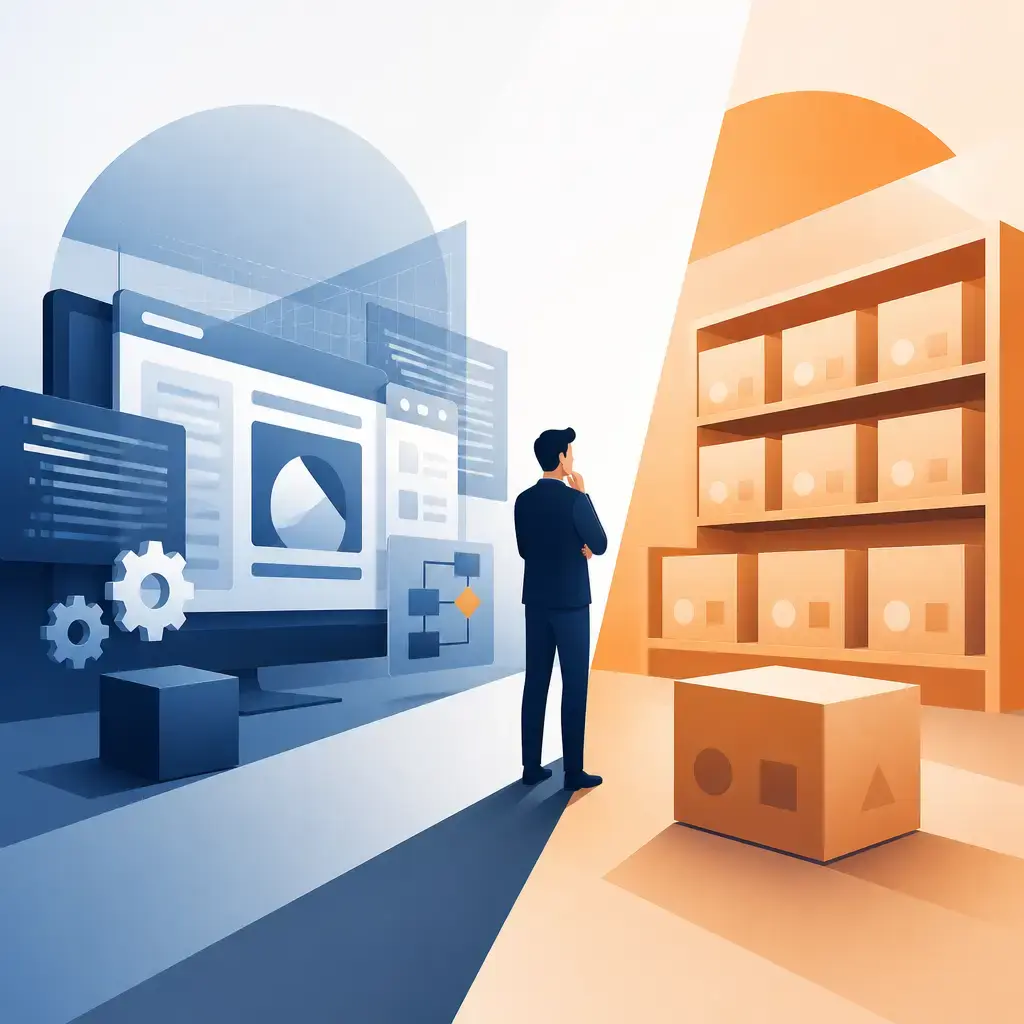
If you run a small or medium sized business, at some point you'll face the same question: do you buy an off-the-shelf product and make do, or do you invest in software built specifically for you? Custom software is often the answer people land on, and for good reason. But it's not the right fit for every situation, and going in without a clear picture of the trade-offs can be an expensive mistake.
Here's a straight look at what custom software actually is, why businesses choose it, and the five advantages and five disadvantages you need to weigh up before committing.
Key Takeaways
- Custom software is built around your specific business needs, rather than a general market audience.
- It offers better integration, scalability and security than most off-the-shelf alternatives.
- The main downsides are higher upfront cost and a longer time to market.
- It works best when your requirements are genuinely unique or when you're planning to scale significantly.
- Getting value from it depends on understanding your requirements clearly before development starts.
What Is Custom Software, Exactly?
Custom software, sometimes called bespoke software, is built from scratch to fit the way your business actually works. It's the opposite of off-the-shelf software, which is designed for a broad market and comes with features you may never use alongside gaps where your real needs sit.
You can have custom software developed by an in-house technical team if you have one. Most businesses don't, so they work with a software development company instead. Either way, the key ingredient before you start is clarity. You need to understand your requirements properly and know what you want the software to achieve. Without that, even the best development team can't give you what you need.
Why Do Businesses Choose Custom Software?
No two businesses are identical, even within the same industry. One company might be struggling with how it manages customer relationships, while a direct competitor is losing time to manual inventory processes. Both problems are real, but they need different solutions.
Off-the-shelf products can help with both of those areas, but they're built for the average business, not yours. And here's the thing most people miss: what you need today isn't what you'll need in three years. When your business grows or your market shifts, off-the-shelf tools often can't keep pace. You end up bolting on extra products, managing integrations that don't quite work, and running multiple systems at once. That creates complexity that costs you time and money.
Custom software is built to grow with you, which is the real reason businesses keep choosing it.
The 5 Main Advantages of Custom Software
1. It Integrates Cleanly With Your Existing Systems
Integration problems are one of the most common headaches for growing businesses. Off-the-shelf software is built for a general audience, so fitting it into your specific setup often means workarounds, patches and compromises. At a certain point, scaling your business means updating or replacing the software entirely.
Custom software sidesteps this because it's designed around your existing systems from the start. It fits in rather than needing to be forced in, which means fewer disruptions and a smoother experience for the people using it every day.
2. You Get Exactly What You Need, Nothing You Don't
Off-the-shelf products are packed with features designed to appeal to as many buyers as possible. The result is cluttered interfaces and functionality you'll never touch, which slows people down and makes training harder.
With custom software, you only build what you actually need. That means cleaner workflows, faster processes and tools that match the way your team works. From inventory management and order processing to order fulfilment, custom solutions can automate the routine tasks that eat up your team's time, freeing them to focus on work that actually moves the business forward.
3. It Helps You Manage Customer Relationships Better
Understanding your customers is harder than it sounds, and the tools you use have a big impact on whether you manage it well. Custom software can be built to capture the customer data that matters to your business specifically, giving you insights into preferences and behaviour that a generic CRM might miss.
Those insights let you offer personalised experiences to different segments of your audience, which builds loyalty and improves conversion and retention rates. You do need to back this up with a willingness to listen to customer feedback and adapt, but the software gives you the foundation.
Building in technologies like AI and machine learning takes this further. These tools analyse the data your customers generate, identify their needs and surface relevant products or content at the right moment. AI chatbots, built into a custom solution, can help customers navigate your site and get answers quickly, which research consistently shows drives higher conversion rates.
4. It Scales as Your Business Grows
Growth without the right infrastructure is chaotic. Off-the-shelf software has a ceiling, and when you hit it you're either stuck or forced into a disruptive migration. Custom software doesn't have that same ceiling.
Because it's built with your business in mind, new features can be added as your needs change. It stays relevant over time rather than becoming an obstacle. For a business that's planning to grow significantly, this flexibility is one of the strongest arguments for going bespoke.
5. Your Data Is More Secure
Data security is a serious concern for businesses of every size and sector. The data your customers share with you is valuable, and if it's compromised, the damage to your reputation and your business can be severe.
Custom software lets you implement security measures designed specifically for your situation, rather than relying on the generic protections built into a mass-market product. Technologies like blockchain can also be incorporated into custom solutions to make them less susceptible to cyber attacks.
The 5 Main Disadvantages of Custom Software
1. The Upfront Cost Is Higher
There's no getting around this one. Building software from scratch costs more at the outset than buying an existing product. The investment can feel significant, especially for smaller businesses, and it's a genuine barrier.
The argument in favour is that it pays for itself over time, because you're not paying for features you don't need, not patching together multiple products, and not facing a costly migration when your off-the-shelf tool stops keeping up. But the initial cost is still a real disadvantage, and it's one you need to plan for.
2. It Takes Longer to Get Up and Running
Off-the-shelf software can be set up and running within days. Custom software takes considerably longer, because it has to be designed, built and tested before anyone can use it. If you need a solution quickly, that's a problem.
The time-to-market disadvantage is worth taking seriously. If speed is a priority, custom software might not be the right answer right now, even if it would be the better long-term fit.
Custom Software vs Off-the-Shelf: A Quick Comparison
| Factor | Custom Software | Off-the-Shelf |
|---|---|---|
| Fit for your needs | Built exactly to your requirements | Designed for a general audience |
| Integration | Designed around your existing systems | May require workarounds |
| Scalability | Scales with your business | Limited beyond a certain point |
| Upfront cost | Higher | Lower |
| Time to deploy | Longer | Quick |
| Data security | Tailored security measures | Generic protections |
| Ongoing flexibility | Features added as needed | Dependent on vendor updates |
Is Custom Software Right for Your Business?
The honest answer is: it depends. If your needs are straightforward and an off the shelf product covers them well, custom software is probably overkill. But if you have genuinely unique processes, you're planning serious growth, or you've already found yourself stitching together multiple tools to get the job done, custom software is worth a serious look.
The most important thing before you start is clarity. Know what problem you're solving. Know what the end result needs to look like. That foundation is what separates a custom software project that delivers from one that doesn't.
If you're weighing up your options, our team at IceBoxDesigns builds bespoke software solutions for businesses that need something built around the way they actually work. Get in touch and we can talk through what makes sense for your situation.
Frequently asked questions
What is the difference between custom software and off-the-shelf software?
Custom software is built specifically for your business and its unique requirements. Off-the-shelf software is a ready-made product designed for a broad market, so it may include features you don't need and miss ones you do.
Is custom software worth the higher upfront cost?
It depends on your situation. The higher upfront cost is a genuine disadvantage, but custom software tends to pay for itself over time through better fit, scalability and the elimination of costly workarounds. If your needs are complex or you're planning to grow, it often makes financial sense in the long run.
How long does it take to develop custom software?
Longer than buying off-the-shelf. Custom software has to be designed, built and tested before it's ready to use. How long that takes depends on the complexity of what you need, but it's worth factoring into your planning if speed of deployment matters.
Can custom software be updated as my business changes?
Yes, and this is one of its main advantages. Because it's built around your business, new features can be added over time as your requirements evolve, without the disruption of switching to an entirely different product.
Related articles
- Software Development
eCoCs Explained: What the UK's Electronic Certificate of Conformity Means for Vehicle Manufacturers
10 September 2026 - Software Development
MVP to Scalable Product: How to Scope It Right and Know When to Scale
20 August 2026 - Software Development
Why ERP Integration, Not AI Tools, Is the Real Starting Point for Manufacturers
6 July 2026
Related services
Need a hand with this? Here's how IceBoxDesigns can help.