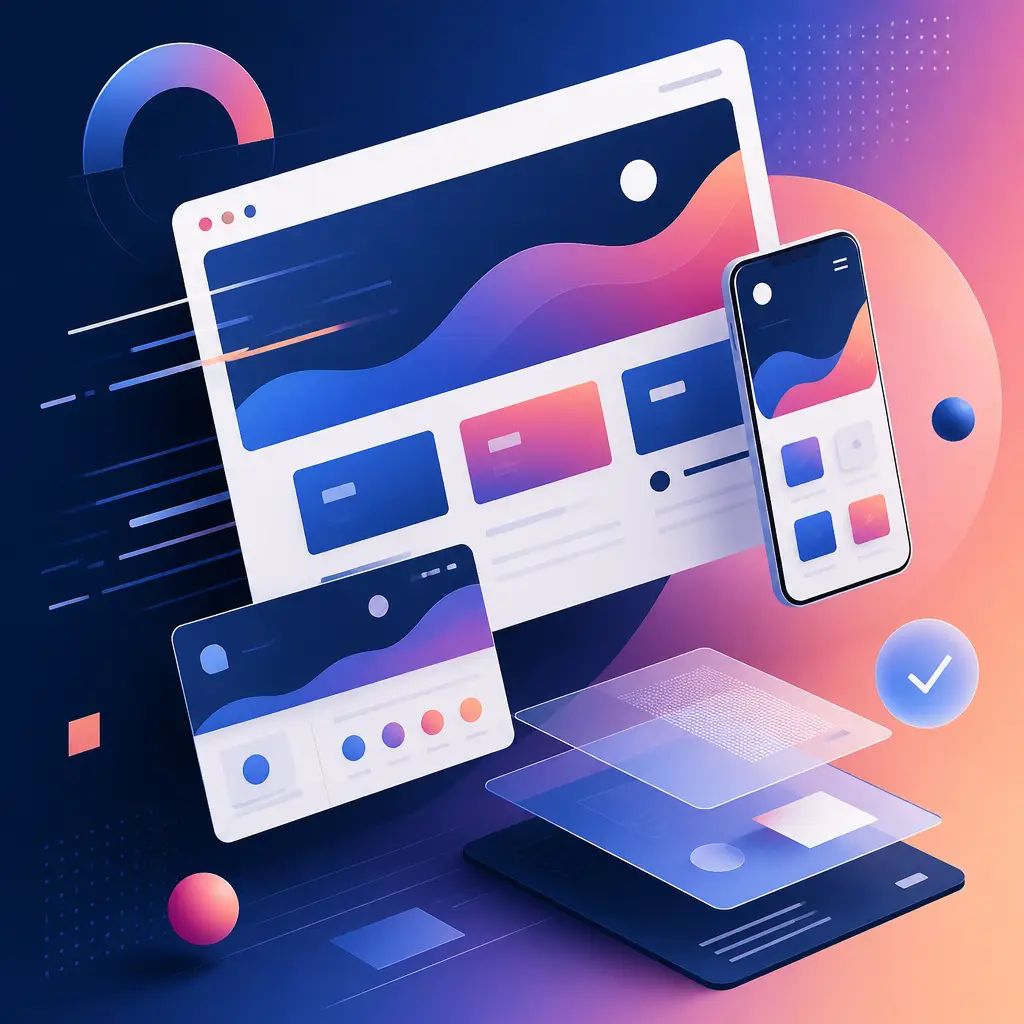
Design moves fast. What felt fresh two years ago can already look tired, and in 2026 the stakes are higher because Google and your visitors are both judging your site harder than ever. Users decide within 3 to 5 seconds whether to stay or leave, and poor design now has a direct cost: lost traffic, lost trust, lost revenue.
Key takeaways
- Pages should load in under 2 seconds; performance is a design requirement, not an afterthought.
- Mobile-first design is the baseline, not a bonus feature.
- Accessibility improves both rankings and conversions, not just inclusivity.
- Minimalism works when it's strategic, empty space without clear messaging doesn't convert.
- Trust signals, AI personalisation and SEO-driven structure all belong in the design brief from day one.
Why Getting Your Design Right in 2026 Actually Matters
Your website is usually the first impression someone gets of your business. If it loads slowly, looks cluttered on a phone, or gives visitors no obvious reason to trust you, they'll leave and go to a competitor. Google notices that too: user experience signals feed directly into how your site ranks. A modern design helps you build credibility, improve engagement, increase conversions, and rank better in search.
Strategic Minimalism: Clean, Not Empty
Minimal design is still very much in, but in 2026 it needs to earn its place. The shift is from aesthetic minimalism (stripped back for the sake of it) to strategic minimalism: fewer distractions, clearer messaging, and calls-to-action that stand out rather than compete with everything else on the page.
White space should be used deliberately. Every section should answer one clear question for the visitor. If it doesn't, it probably shouldn't be there.
AI Powered Personalisation
Artificial intelligence is changing how visitors interact with websites. Dynamic content that adapts based on someone's browsing behaviour, smart service or product recommendations, and AI chatbots that handle real-time support are all becoming standard expectations rather than nice-to-haves.
The reason this works is simple: a website that feels relevant to you doesn't feel generic. A returning visitor who sees content tailored to their previous visit is far more likely to engage than someone who lands on a one-size-fits-all homepage. If you're curious about bringing AI tools into your business, take a look at our AI business automation services.
Performance First Design: Speed Is Non-Negotiable
In 2026, pages are expected to load in under 2 seconds. Heavy animations that haven't been optimised, bloated code, and uncompressed images will cost you visitors and rankings. Core Web Vitals remain a critical part of how Google assesses your site.
The practical shift this demands from designers is real: lightweight layouts, optimised images and fonts, and efficient code frameworks are now design decisions, not just developer ones. Beauty has to load fast, or it doesn't work.
Mobile-First, Thumb Friendly Design
Mobile traffic dominates, and designing for desktop first is simply the wrong way round now. In 2026, mobile-first means large tap-friendly buttons, vertical scrolling layouts, and navigation that works comfortably with one hand. If your site feels awkward on a phone, most visitors won't bother adjusting, they'll just leave.
The right approach is to design for mobile first and then scale up for desktop, not the other way around.
Accessibility as a Design Standard
Accessibility is no longer an optional add-on. Visitors expect high colour contrast, readable fonts, keyboard navigation, and layouts that work with screen readers. This isn't just about inclusion (though that matters). Accessible websites also reduce bounce rates and improve engagement, both of which are signals Google pays attention to. Better accessibility means better UX for everyone, not just users with disabilities.
Micro Animations: Subtle and Purposeful
Animations are still trending, but restraint is what separates good use from bad. In 2026, what works is hover effects, button feedback, and smooth transitions that guide the user. What doesn't work is overloaded animation, slow-loading effects, and visuals that distract rather than direct. The rule of thumb: animations should guide users, not entertain them endlessly.
Dark Mode and Adaptive Colour Themes
Dark mode has moved from a novelty to an expectation. It reduces eye strain, looks contemporary, and saves battery on mobile devices. Beyond simply offering a dark option, the smarter trend is adaptive colour themes that automatically adjust based on the user's device settings or stated preference. It's a small detail that signals a thoughtful, modern site.
Storytelling Through Design
People connect with outcomes, not feature lists. Design that tells a story, through scroll-based narratives, visual timelines, and purpose-driven sections, tends to convert better than design that just presents information. Reframing "Our Services" as "How We Help You Grow" is a simple example, but it reflects a broader shift: visitors want to understand what changes for them, not just what you offer.
Trust-Focused Design Elements
Trust is currency in 2026. Real testimonials, case studies, security badges, and clear contact details all build credibility quickly. The key is making these elements visible without letting them overwhelm the page. Trust signals should be woven into the layout naturally, not bolted on as an afterthought.
SEO and Design Working Together
Design and SEO can't operate in separate silos any more. An SEO-friendly design includes clean URL structures, properly optimised headings (H1 through H3), fast load times, and schema-ready layouts. A beautiful site that doesn't rank won't bring results. A fast, well-structured site that looks outdated won't convert. You need both.
If SEO is a gap for your business right now, it's worth understanding how design decisions either support or undermine your search visibility from the ground up.
How to Apply These Trends Without Rebuilding Everything at Once
You don't need to redesign your entire site overnight. A sensible order of priority looks like this:
- Performance optimisation, fix load speed first, everything else builds on it.
- Mobile usability, check your site on several devices and fix friction points.
- Clear messaging, tighten up your copy and calls-to-action.
- Trust elements, make sure testimonials and contact details are easy to find.
- Visuals and interactivity, then upgrade the look and feel gradually.
If you'd like a hand working through this, our web development team can help you prioritise what will have the biggest impact for your site.
Ready to Bring Your Site Up to 2026 Standards?
If your site is overdue a refresh, or if you're building something new and want to get it right from the start, we can help. Get in touch with IceBoxDesigns and let's talk about what a modern, high-performing website looks like for your business.
Frequently asked questions
Is minimal website design still effective in 2026?
Yes, but only when it's strategic. Minimalism works when it supports clear messaging and strong UX. Empty minimalism, stripping things back without a clear purpose, doesn't convert.
Does website design affect SEO rankings?
Directly, yes. Speed, mobile usability, accessibility and site structure all influence how Google ranks your pages. Design and SEO need to work together from the start.
Are AI chatbots worth adding to a small business website?
They can be, when implemented correctly. AI chatbots can improve engagement, provide real-time support and help with lead generation, provided they're set up to genuinely assist rather than frustrate visitors.
Should small businesses bother keeping up with design trends?
Yes. Many of the trends for 2026, performance, mobile usability, accessibility, trust signals, are practical improvements that help small businesses compete with larger brands, not just cosmetic upgrades.
Related articles

Related services
Need a hand with this? Here's how IceBoxDesigns can help.