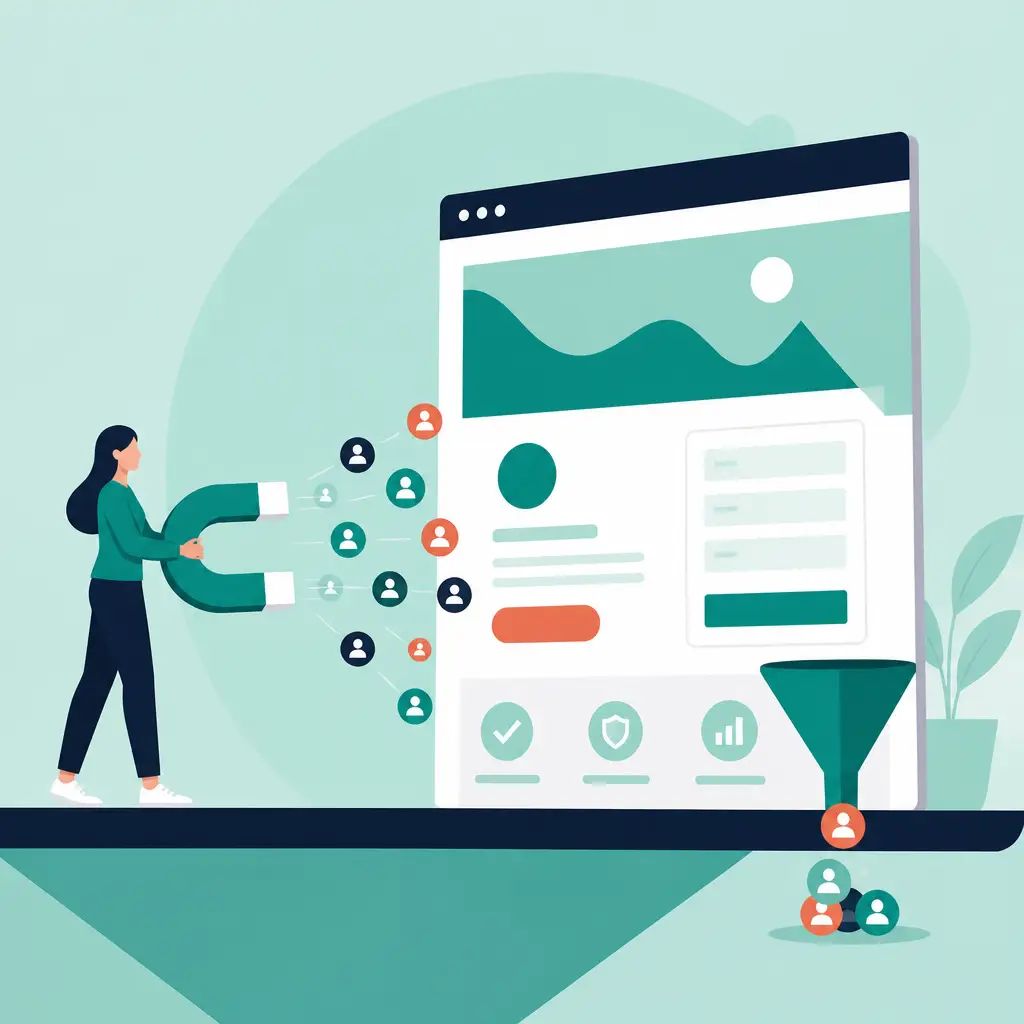
Most landing pages don't fail because of bad design. They fail because the offer is unclear, the form asks too much, or the page doesn't match the ad that brought the visitor there in the first place. The good news? Those are all fixable problems.
If you're running paid ads, email campaigns or any kind of targeted traffic, your landing page is where the money is either made or lost. Businesses with 10 to 15 landing pages generate 55% more customers than those with fewer than 10 pages. That's not a marginal difference.
Key Takeaways
- Businesses with 10 to 15 landing pages generate 55% more customers than those with fewer than 10.
- The average landing page conversion rate across all industries is 4.3%.
- 87% of marketers say UX and copy are what they look at first when conversions underperform.
- Personalised CTAs convert 42% more visitors than generic ones.
- Embedding video on a landing page can increase conversions by up to 86%.
What a Landing Page Actually Is (and Isn't)
A landing page is a standalone page built around one specific goal. No navigation menus, no competing links, no sidebar distractions. Just one message, aimed at one audience, with one next step.
That goal might be booking a call, downloading a guide, registering for a webinar, signing up to a newsletter, or making a purchase. Everything on the page exists to support that single decision.
Landing pages are typically used when you're driving traffic from a defined source, paid ads, email marketing, social posts, or partnerships. The visitor arrives with a clear intent, and the landing page's job is to continue that conversation and guide them towards converting.
This is the key difference between a landing page and a standard website page: focus. A homepage has to cater to many audiences and many journeys. A landing page doesn't. It's purpose-built, tightly framed and conversion-led.
What Makes a Landing Page High-Converting?
A high-converting landing page does three things well. It makes the offer instantly understandable. It removes doubt and friction. And it makes the next step feel easy and safe.
Conversion always comes down to confidence. Your page should help someone think: "Yes, this is for me, and I know what to do next."
It helps to think of landing pages not as mini websites, but as decision pages. Every element should either move a user forward or reduce the chance they leave.
9 Landing Page Best Practices for 2026
1. Start with Message Match
If someone clicks your ad and lands on a page that talks about your brand in general terms rather than delivering on the specific offer that got the click, they'll leave. They won't browse around trying to figure it out.
Your landing page must feel like the natural continuation of whatever brought the visitor there. Match the core promise, the language you use to describe it, and the intent behind the click.
2. Lead with Clarity
Your hero section should answer four questions in seconds: What is this? Who is it for? What do I get? What do I do next?
A strong hero typically includes a clear headline that states the outcome, a short supporting line that explains how or why, one primary call-to-action, and a trust cue such as a logo strip, star rating, or testimonial snippet. If your headline could sit on any competitor's page, it probably isn't specific enough.
3. One Page, One Job
High-converting landing pages are focused. They resist the temptation to include everything you know about the business. The best pages make one promise and support it throughout.
That means one primary CTA. You can repeat it as the page scrolls, but avoid competing CTAs with different outcomes on the same page, for example, "Book a demo" and "Download guide", unless you're intentionally offering a secondary, lower-commitment step.
4. Reduce Friction in Your Form
Most landing pages lose conversions at the form. Not because people hate forms, but because forms feel like effort and risk.
Keep yours short. Ask only for what you genuinely need to take the next step. Two small changes that often lift conversion rates: use helpful microcopy that reduces fear (something like "We'll reply within 1 business day" or "No spam. Ever."), and label fields clearly rather than relying on vague placeholder text.
5. Build Trust Before You Ask for Commitment
Landing pages convert when they feel safe. Trust comes from specificity and evidence, not generic claims. "We're experts" means nothing. Specific results, real testimonials, recognisable client logos and relevant accreditations do.
Testimonials that mention the problem and the outcome are particularly effective. A single strong testimonial can do more than three paragraphs of sales copy, and testimonials appear on 36% of the top-performing landing pages.
6. Handle Objections on the Page
When users hesitate, they're usually thinking something along these lines: Is this for me? Is it worth it? Will it work? What's the catch? What happens after I submit?
High-converting landing pages answer those objections as part of the natural flow. You don't need a lengthy FAQ section, but you do need reassurance where it counts. A solid pattern to follow is: Outcome, then Proof, then Process, then Objections, then CTA.
7. Make Your CTA Feel Human and Low-Risk
Your CTA isn't just a button label. It's the moment of truth. Shorter landing pages with clear CTAs outperform longer ones by 13.5%, and personalised CTAs convert 42% more visitors than generic ones.
If "Book a call" feels too intense for cold traffic, soften the step. Try "Get a quote", "Request availability", "Talk to our team", "Get a free audit" or "See pricing". The best CTA language reflects the user's intent, not your internal process.
8. Use Video Intentionally
A short explainer or testimonial video can communicate value quickly, demonstrate credibility and address common objections without asking visitors to read large blocks of text. Embedding video on a landing page can increase conversions by up to 86%.
That said, video needs to be handled carefully. Poorly optimised video can slow load times and hurt both user experience and SEO. Embed via YouTube or Vimeo rather than hosting large video files directly on your server.
9. Make It Fast, Mobile-First and Scannable
61.4% of all internet traffic now comes from mobile devices, so high-converting landing pages are often won or lost on mobile. The page should load quickly, particularly the hero section. The CTA should be visible early. Paragraphs should be short, headings should guide the eye, and buttons should be large enough to tap comfortably.
A page heavy with animations and giant images might look impressive but convert badly, especially on mobile connections.
| Best Practice | Why It Matters |
|---|---|
| Message match | Mismatched pages cause visitors to leave immediately |
| Clear hero section | Answers the key questions within seconds |
| Single CTA | Removes decision paralysis |
| Short forms | Reduces the effort and perceived risk of submitting |
| Trust signals | Testimonials appear on 36% of top-performing pages |
| Objection handling | Keeps hesitant visitors moving forward |
| Human CTA language | Personalised CTAs convert 42% more than generic ones |
| Video embeds | Can increase conversions by up to 86% |
| Mobile and speed | 61.4% of traffic is mobile, slow pages kill conversions |
Getting the Build Right
None of these best practices matter if the page itself is slow, breaks on mobile or is a pain to update when your campaign messaging changes. If you're investing in paid traffic, it's worth making sure your landing pages are built properly from the start. Our custom web development service covers exactly this, pages built for performance and conversion, not just appearance.
And once campaigns are live, keeping those pages fast, secure and up to date is just as important as the initial build. That's where an ongoing website maintenance plan makes a real difference, so a plugin update or a slow server doesn't quietly kill your conversion rate while you're focused on the campaign.
Ready to Build Landing Pages That Actually Convert?
If your current landing pages aren't generating the enquiries you'd expect, the issue is almost always in one of the nine areas above. Start with message match and your hero section, those two alone can make a significant difference. And if you'd like help building or improving a landing page for your next campaign, get in touch with the IceBoxDesigns team.
Frequently asked questions
What is a good conversion rate for a landing page?
The average landing page conversion rate across all industries is 4.3%. If yours is consistently below that, it's worth reviewing your headline clarity, form length, trust signals and CTA language.
How many landing pages should my website have?
Businesses with 10 to 15 landing pages generate 55% more customers than those with fewer than 10. Each campaign, audience segment or offer ideally warrants its own dedicated landing page.
Should I remove the navigation menu from a landing page?
Yes. A landing page works best without a navigation menu. Links that take visitors elsewhere before they convert are a distraction, and removing them typically improves conversion rates.
Does video really help landing page conversions?
It can, significantly. Embedding a short explainer or testimonial video on a landing page can increase conversions by up to 86%. The key is keeping it short, relevant and embedded via YouTube or Vimeo rather than hosted directly on your server, to avoid slowing the page down.
Related articles
Related services
Need a hand with this? Here's how IceBoxDesigns can help.