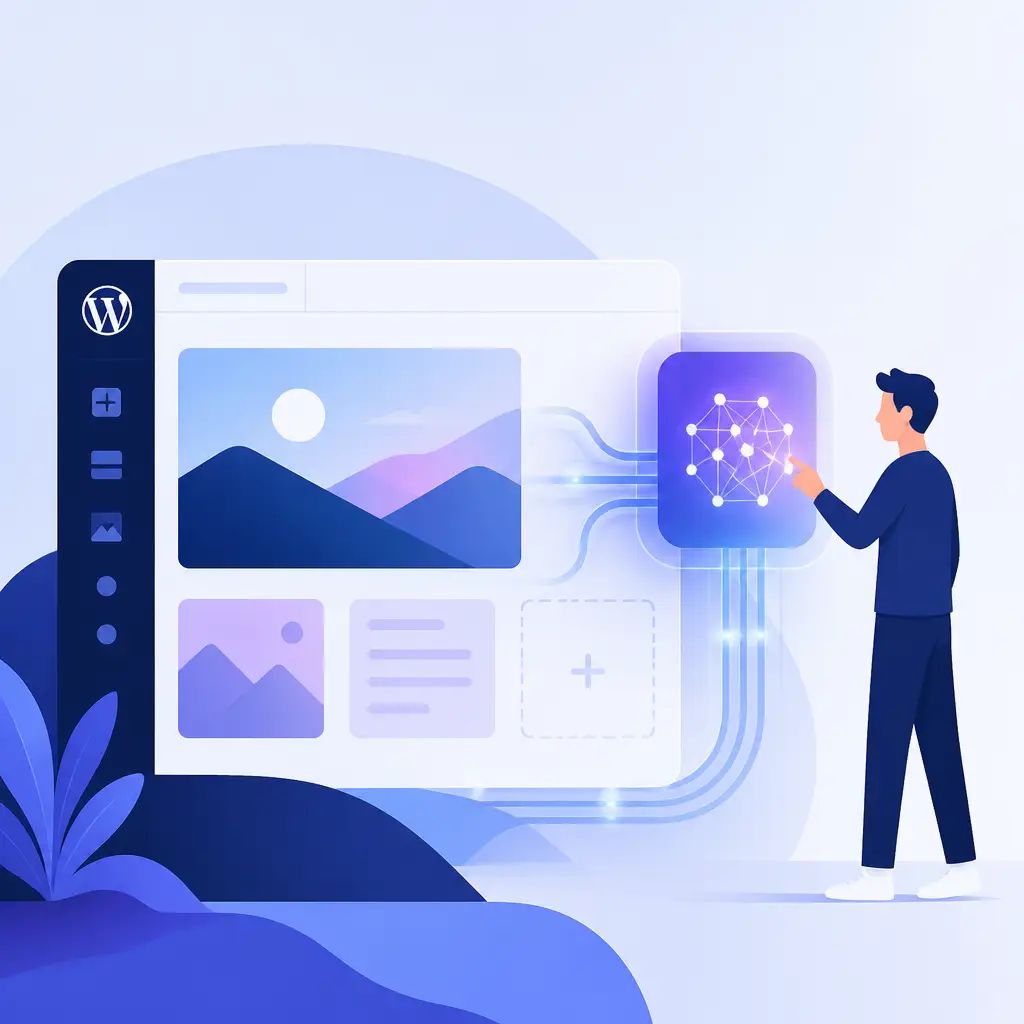
AI can improve small business productivity by 30 to 40%, but only when it's guided by clear human thinking. Used without a plan, it makes a mess fast. Used well, it lets a lean team do work that used to need a much bigger one.
Key Takeaways
- AI works best when you already understand your customers, your processes, and who's responsible for what.
- It's a speed multiplier and pattern-recognition tool, not a strategy department or brand voice.
- Over 70% of small business leaders plan to increase AI investment in 2026.
- AI chat tools can resolve up to 60% of inbound customer enquiries without a human rep getting involved.
- AI-powered teams produce content 30 to 50% faster than traditional workflows, but humans still need to shape the message.
The Power Tool Problem
Think of AI like a power drill. In the right hands, with a clear plan, it speeds everything up. Without one, you're drilling through water pipes. For small businesses, that difference is everything.
Most small business owners are already stretched thin, managing operations, responding to customers, and marketing the business all at once. AI closes that gap, but only if you use it intentionally, on tasks that are already stealing your time, and without handing over your voice or vision in the process.
Here's what that looks like in practice:
- An interior design studio uses AI to pre-write proposal drafts, freeing the founder to focus on client strategy.
- A boutique law firm uses smart chat to handle FAQs, so associates aren't wasting hours answering "how much do you charge?"
- A wellness brand uses AI to auto-generate product descriptions from a master template, keeping tone consistent and workflows moving.
Those aren't edge cases. Over 70% of small business leaders plan to increase AI investment in 2026, because AI lets lean teams punch well above their weight.
AI Cannot Replace Human Judgement
This is worth saying clearly before anything else. AI only works when humans guide it. The best outputs come from great inputs. When you treat AI like an intern who needs direction, you get results. When you treat it like a CEO making autonomous decisions, you get chaos.
You have to be enough of an expert to ask the right question, and to know what a good answer actually looks like. Without that, AI will confidently give you something that sounds plausible and is subtly wrong.
What AI for Small Business Actually Means
A lot of businesses hear "AI" and think: brilliant, something that can run the whole operation while I sleep. It can't. AI is a very capable assistant with zero context about your business. You still have to tell it what to do, when to do it, and why.
The real value comes when you already know who you are, what you offer, and what your customers need. AI doesn't invent your strategy, it helps you execute it faster.
When AI Works Best
AI is, at its core, pattern-matching maths. It works well when the human side is already halfway sorted. That means:
- You understand your customer base, who they are and what they want.
- You've documented your basic processes, how a task gets from start to finish.
- You know who's responsible for what, even if that's just you.
Digital tools should support human clarity, not replace it. If you don't have that clarity yet, adding AI into the mix just accelerates the confusion.
What AI Is Good At
- A decision-support system, it spots patterns in data faster than any person can.
- A speed multiplier, great for drafts, summaries, and sorting large amounts of information.
- A pattern-recognition engine, it sees trends and gaps before most humans have even defined the problem.
What AI Isn't
- Not your strategy department. It doesn't know your goals unless you tell it.
- Not your brand voice. It can mimic a tone, but it can't invent your personality.
- Not a set-and-forget solution. Every AI tool needs human checks and ongoing direction.
3 Ways Small Businesses Are Using AI Right Now
1. Marketing and Content
Marketing is usually where businesses first try AI, and for good reason. AI-powered teams produce content 30 to 50% faster than traditional workflows. The grunt work, first drafts, outlines, SEO titles, meta descriptions, graphics that speed up the design process, gets done quickly, freeing you to focus on the message, the strategy, and the creative judgement that actually connects with people.
The caveat: AI tends to repeat phrases and produce content that feels generic. A human still needs to shape the emotional message, make it specific, and make it real. AI gets the scaffolding up. You still have to decorate the house.
2. Customer Support and Communication
Most customer service is the same five questions on repeat. That's exactly where AI earns its keep. AI chat tools can resolve up to 60% of inbound enquiries without a human rep involved at all, which means your team spends less time copy-pasting the same answers and more time on conversations that actually need a person.
AI handles this well:
- Answering FAQs in chat widgets or help centres.
- Transcribing and summarising support calls.
- Routing complex issues to the right person, faster.
The goal is to automate the predictable so your team can handle the meaningful.
3. Operations, Admin and Internal Knowledge
This is the least glamorous use of AI, and often the most valuable. Small teams get slowed down by meetings with no notes, tasks with no priority, and documents no one can find. AI fixes that quietly in the background:
- Meeting summaries that capture key details automatically.
- Daily task prioritisation based on urgency and impact.
- Auto-tagged internal documents for quick searching.
- Smart scheduling based on calendars and patterns.
When you're a small team, saving 10 minutes per task adds up fast. Growth isn't just about revenue, it's about reducing friction.
The Two Most Common AI Mistakes
Businesses either go all-in too fast, downloading a dozen tools and ending up buried under dashboards they never open, or they don't go in at all and miss real competitive advantage. Neither works.
The smarter approach is to start with one clear, time-consuming task, something you already do repeatedly, and test AI on that before expanding. Our AI business automation service is built around exactly this: finding the right entry points for your business rather than throwing tools at the wall.
If you're not sure where AI fits alongside your wider digital presence, it's worth getting your website maintenance and infrastructure in good shape first, so that any automations you add have a solid foundation to run on.
Start With Strategy, Not Software
The businesses getting real value from AI aren't the ones with the most tools. They're the ones who went in knowing what problem they were solving. Pick one task that's eating your time, make sure you can describe the process clearly, and use AI to help you do it faster, with a human checking the output.
That's it. That's the whole framework.
If you'd like help working out where AI could make the biggest difference for your business, get in touch with the IceBoxDesigns team. We'll cut through the noise and focus on what actually moves the needle for you.
Frequently asked questions
How much can AI actually improve productivity for a small business?
AI workflows can improve productivity by 30 to 40%, and AI-powered content teams produce content 30 to 50% faster than traditional workflows. The gains are real, but only when AI is guided by clear human strategy and used on tasks that are already well understood.
Can AI replace my customer service team?
No, but it can handle a significant share of the workload. AI chat tools resolve up to 60% of inbound enquiries without a human rep involved. The remaining 40% still needs your team, particularly for complex or sensitive conversations.
What do I need to have in place before using AI in my business?
You need a basic understanding of your customers, some documented processes for how tasks get done, and clarity on who is responsible for what. AI works best when the human side is already halfway sorted, it accelerates your thinking, it doesn't replace it.
Is AI suitable for businesses that don't have a dedicated tech team?
Yes, many AI tools are designed for non-technical users. The most important factor isn't technical skill, it's knowing what problem you're trying to solve and being able to check whether the AI's output is actually good. Working with a digital agency can help you pick the right tools and avoid costly trial and error.
Related articles
Related services
Need a hand with this? Here's how IceBoxDesigns can help.